Namibia is one of the most memorable and unique places my husband and I have ever traveled to in the world. More than 5 years ago, I’d come across a hauntingly beautiful photograph of the Skeleton Coast, which captured my imagination about the 1,500km rugged and isolated coastline in the remote northwestern corner of Namibia. It looked so remote back then, and there was so little information on it – I had no idea how to get there! But last year, I discovered the Hoanib Skeleton Coast Camp, which is the only camp from which to explore the highly inhospitable Skeleton Coast. I was instantly hooked on the idea of spending a few connectivity-free days in the middle of the desert, with no other habitat and roads for miles and miles. And so we built a trip around the Skeleton Coast in Namibia – which turned out to be absolutely magical.
Flying Into Skeleton Coast
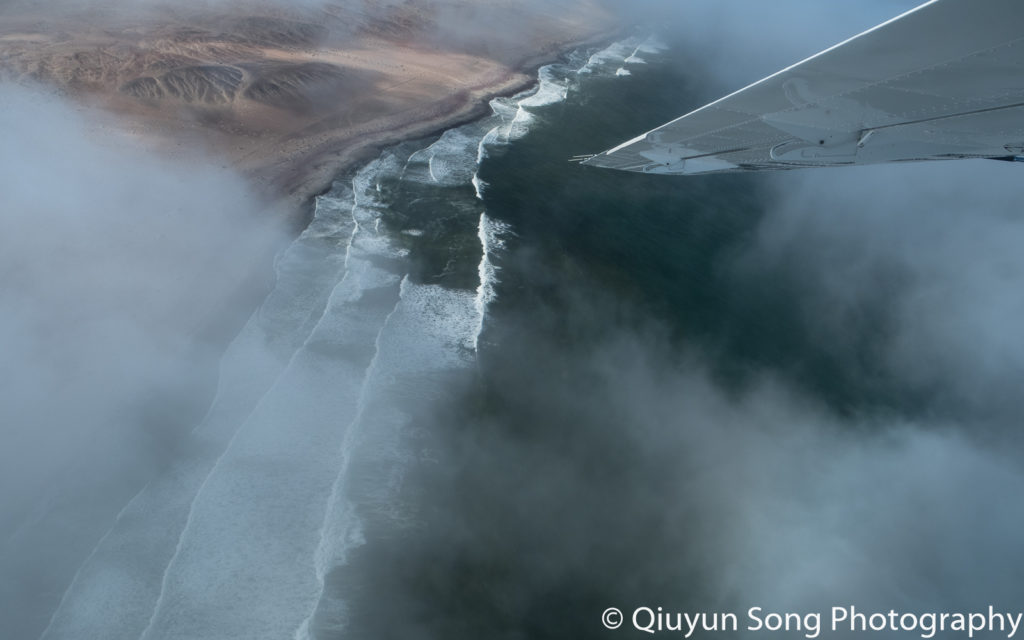
There’s no other way to get to the Skeleton Coast, other than to fly. And there is probably no better way to see it than from the air. The Skeleton Coast is a stark landscape – miles and miles of dramatic sand dunes of the Namib Desert, formed from one of the world’s most arid and inhospitable climates, meet with the Atlantic Ocean along a rugged coastline to form a constant, heavy surf. The coast is further enveloped by a dense fog year-round due to the cold current, and shipwrecks litter the coastline. During the flight in, we flew over the eerie sand dunes, and then descended through the fog when we came in to land. The experienced pilots of Wilderness Safaris gave us a spectacular flight over the Skeleton Coast.
So, What’s There?
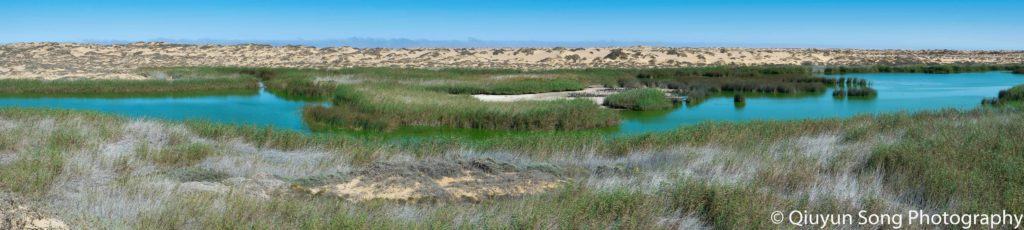
After we landed, we drove around the white sand dunes of the Namib Desert. The vastness and isolation really made us feel we were in another world. And then, out of nowhere, we saw a glistening body of turquoise and green. We’d arrived at a large desert oasis! Seeing a desert oasis in real life is very surreal. Oases are such rare and remarkable creations of nature – desert for miles and miles, then suddenly out of nowhere, a body of fresh water. Flocks of birds flew around the oasis and lush greenery surrounded the water. Away from the heat of the day, the oasis must be teeming with desert-adapted wildlife.
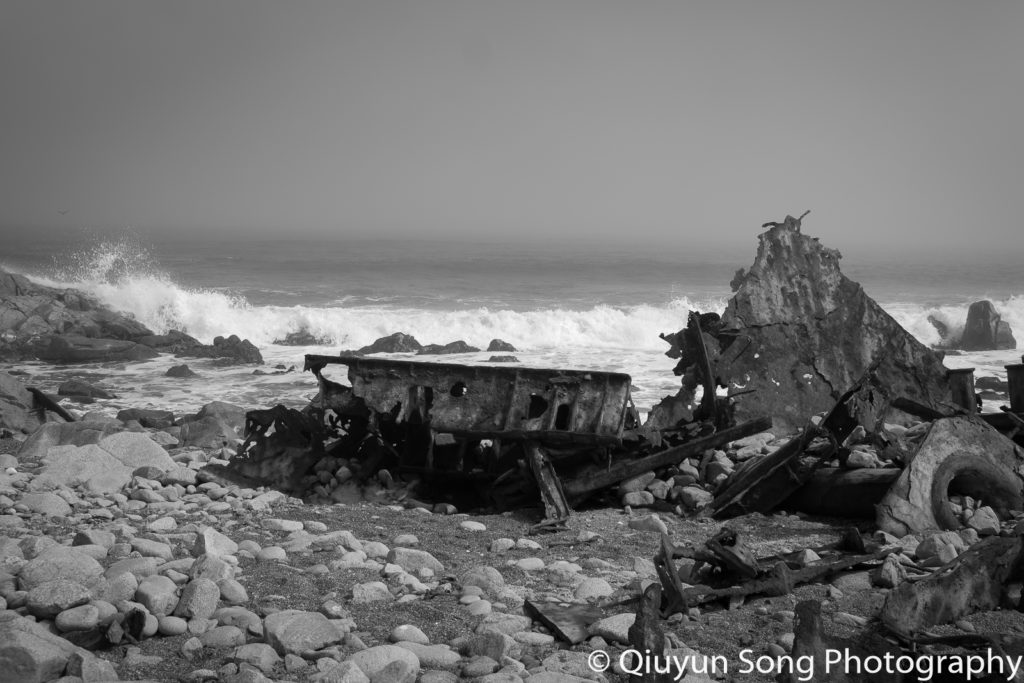
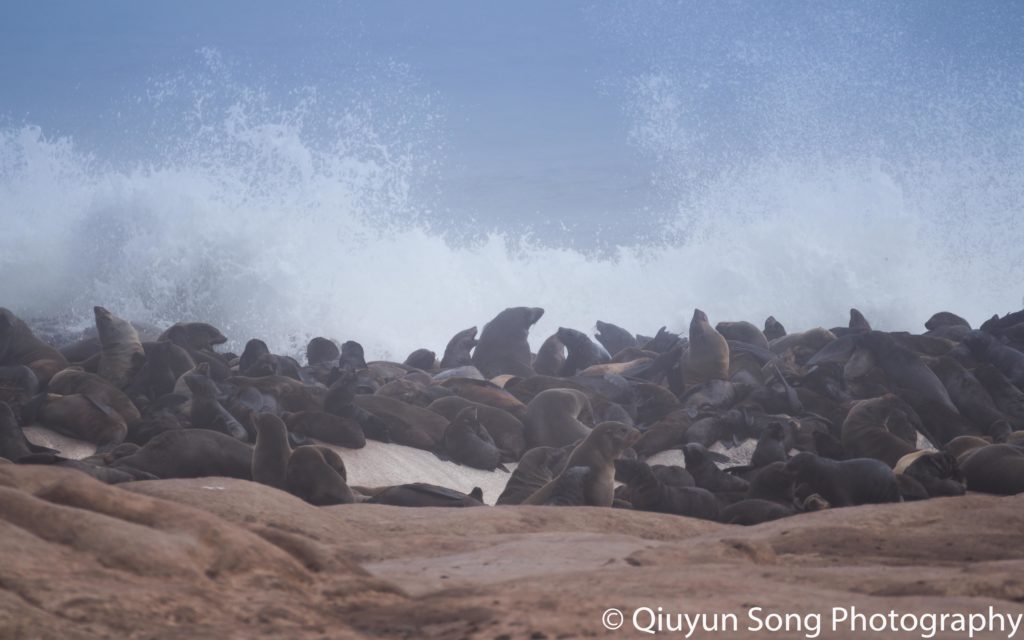
As captivating as the oasis was, it was time to go. We drove down a 45 degree incline on the arm of a big daddy sand dune, and had a rocky ride to the coast, where we passed the shipwrecks and seal colonies that typify Namibia’s Skeleton Coast. Just a short drive away from the desert, it was suddenly cold, gusty and foggy along the coast. The shipwrecks continue to be battered by water and wind. No idea how the seal colonies thrive in such an inhospitable climate, but that’s nature for you.
The Thrilling Experience Of Finding Desert-Adapted Wildlife At Hoanib
When we were planning the trip to the Hoanib Skeleton Coast Camp, our main purpose was to see the Skeleton Coast. However, what was unexpected was the thrill of finding desert-adapted wildlife around the Hoanib River, the region where the camp was located. The Hoanib River is a dry river, which means all the water is underground. The only way you know where the river is, is by tracing the greenery above the ground. As we looked around the barren Namib desert landscape, we really didn’t expect much of the game drives at Hoanib.
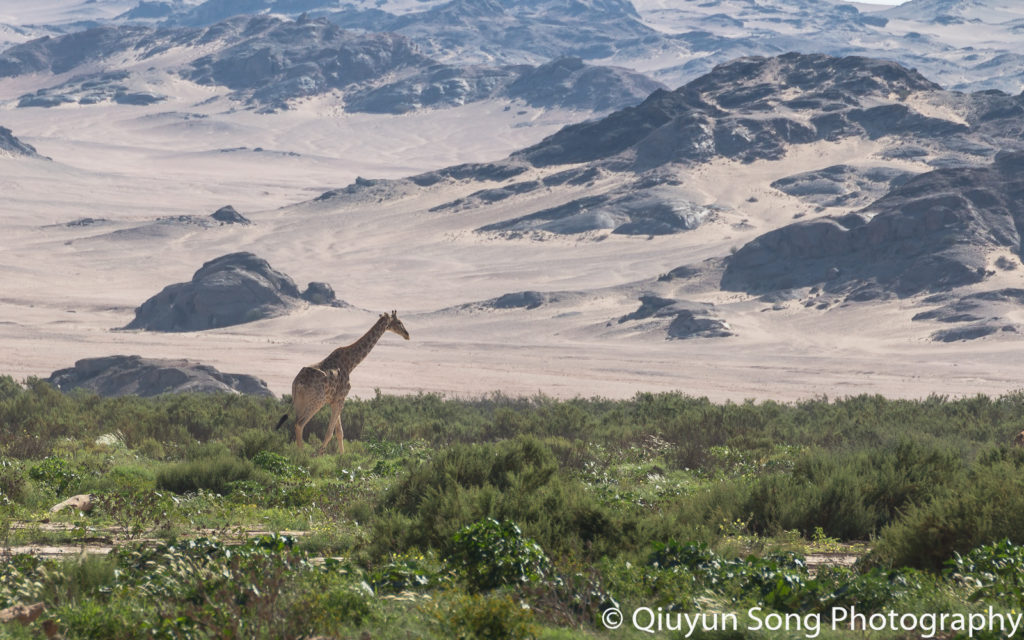
But game viewing at Hoanib turned out to be one of the best safari experiences my partner and I ever had. Sure, wildlife is scarce. But it was fun driving through dramatic mountainous desert landscape for miles, and then discovering cheetah or lion footprints (even if you don’t see them), or spotting a heavily camouflaged animal in the middle of nowhere. What I also discovered was the joy of photographing against such an incredible landscape – it framed hundreds of picture perfect shots with just about ANY animal in the frame. Usually plain giraffes, jackals and elephants became so interesting when photographed against the rugged mountain ranges, desert and lush greenery.
Despite it being a short stay, the Skeleton Coast experience definitely ranks as one of my top travel experiences. I would absolutely love to return and do a trip further north to the Kunene River region bordering Angola.
If you loved the photos above, check out more of my Namibia photos here!